
What Is Continuing Airworthiness? How Aircraft Stay Safe Throughout Their Service Life
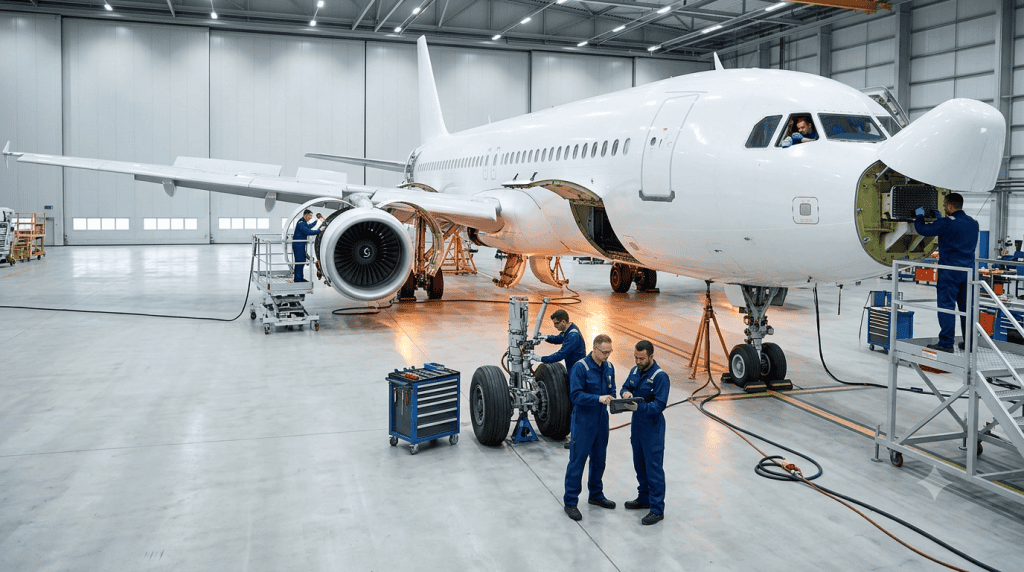
Most people assume an aircraft is built, handed over to an airline, and then simply flown for twenty or thirty years with the occasional service check, much like a car. The reality is far more demanding. From the moment an aircraft is delivered, it enters a continuous cycle of inspection, repair, monitoring, and documentation that never really stops until the aircraft is retired.
This process has a name: continuing airworthiness. It is one of the main reasons commercial aviation has become one of the safest forms of transport ever created, even though aircraft fly through brutal temperature swings, vibration, pressure changes, and decades of structural fatigue.
This article explains what continuing airworthiness actually means, who is responsible for it, and how thousands of small decisions made on the ground keep millions of flights safe every year.
What Does Continuing Airworthiness Mean?
When an aircraft rolls out of the factory, it receives a certificate confirming it meets the design standards required to fly safely. That certificate is not a lifetime guarantee. It is a snapshot of the aircraft’s condition on one particular day.
Continuing airworthiness is the ongoing process of keeping that aircraft in a condition that remains safe to operate, every single day it is in service, for as long as it flies. It covers everything from a daily walk-around inspection to a major structural check that might happen once every several years.
In simple terms: certification proves the aircraft was built correctly. Continuing airworthiness proves it is still safe to fly today, tomorrow, and next year.
Why Aircraft Cannot Simply Fly Forever Without Attention
An aircraft is essentially a machine that gets stretched, squeezed, heated, cooled, and vibrated thousands of times a year. None of this is gentle on metal or composite structures.
A few of the main culprits:
- Fatigue – every takeoff and landing flexes the airframe slightly. Repeated over thousands of cycles, this can eventually lead to tiny cracks, similar to how a paperclip eventually snaps after being bent back and forth enough times.
- Corrosion – moisture, de-icing fluid, and salty coastal air can attack metal structures over time, especially in hidden areas like wheel wells or behind insulation.
- Wear – moving parts such as landing gear actuators, flight control linkages, and bearings physically wear down with use.
- Environmental exposure – an aircraft cruising at altitude experiences temperatures around minus 50 degrees Celsius, then lands into 35 degree heat an hour later. That thermal cycling stresses materials and seals.
- Vibration – engines, airflow, and turbulence subject the structure to constant low-level shaking that adds up over the years.
- Aging systems – electrical wiring, hydraulic seals, and electronic components degrade gradually, even with no obvious external sign of damage.
None of this means aircraft are fragile. It means they are engineered with these realities in mind, and maintained according to a programme designed to catch problems long before they become dangerous.
The Building Blocks of Continuing Airworthiness
Continuing airworthiness is not one activity. It is a collection of interlocking processes that work together.
Scheduled maintenance is planned work carried out at fixed intervals, based on flight hours, flight cycles, or calendar time, depending on which limit is reached first.
Routine inspections range from a quick pre-flight walk-around to detailed checks of specific systems and structures.
Component replacement covers parts that are swapped out either because they have reached a fixed life limit or because inspection shows they are wearing out.
Life-limited parts are components like certain engine discs or landing gear parts that must be replaced after a defined number of cycles or hours, regardless of their apparent condition, because their failure mode is not easily detected through visual inspection alone.
Functional tests confirm that a system actually performs as designed, not just that it looks fine. A hydraulic system might look intact but still fail a pressure test.
Structural inspections look for cracking, corrosion, or deformation in the airframe, often using techniques like eddy current testing or ultrasonic inspection that can detect damage invisible to the naked eye.
Software updates apply to modern aircraft where flight control computers, displays, and other systems run software that occasionally needs revision, much like updating a phone, except every update goes through a formal certification and approval process first.
Service Bulletins are recommendations issued by the aircraft or component manufacturer, often to address a known issue found across the fleet worldwide.
Airworthiness Directives are mandatory instructions issued by a regulatory authority when a safety concern is serious enough that compliance is no longer optional.
Repairs fix damage, whether from corrosion, a hard landing, ground equipment contact, or normal wear.
Modifications change or upgrade the aircraft, sometimes for performance reasons, sometimes to comply with new regulations or to incorporate manufacturer improvements.
Every one of these exists for a specific reason: to catch a specific type of degradation before it becomes a safety issue.
Here’s a complete, beginner-friendly section that fits the style of your existing article while remaining technically accurate.
Continuing Airworthiness vs Continued Airworthiness
The terms continuing airworthiness and continued airworthiness are often used interchangeably in everyday conversation. However, they refer to different concepts within the aviation industry.
| Continuing Airworthiness | Continued Airworthiness |
|---|---|
| Ensures an individual aircraft remains airworthy throughout its service life. | Ensures the aircraft type design remains safe throughout its operational life. |
| Primarily the responsibility of the aircraft operator and its CAMO. | Primarily the responsibility of the aircraft manufacturer (Type Certificate holder) in coordination with the aviation authority. |
| Covers maintenance planning, inspections, repairs, modifications, defect control, and regulatory compliance. | Covers monitoring in-service experience, investigating design issues, developing corrective actions, and updating maintenance instructions. |
| Applies to a specific aircraft identified by its registration and serial number. | Applies to all aircraft of a particular type or model. |
| Uses maintenance records, Airworthiness Directives (ADs), maintenance programs, and approved repair data to maintain compliance. | Uses fleet-wide operational data, engineering analysis, Service Bulletins (SBs), and regulatory actions to improve the aircraft design. |
| Managed daily throughout the aircraft’s operational life. | Managed continuously by the design organization as long as the aircraft type remains in service. |
A useful way to remember the distinction is:
Continued airworthiness keeps the aircraft design safe. Continuing airworthiness keeps each individual aircraft safe.
Both processes work together. Manufacturers identify and resolve design-related safety issues, while operators and CAMOs ensure every aircraft complies with the latest maintenance and regulatory requirements throughout its service life.
The Aircraft Maintenance Programme
All of this maintenance activity does not happen randomly. It is governed by a document called the Aircraft Maintenance Programme, which is built using guidance from the manufacturer’s Maintenance Planning Document, commonly called the MPD.
The MPD lays out every maintenance task the aircraft type requires, along with the interval at which it must be performed. Intervals are usually expressed in:
- Flight hours – actual time spent airborne
- Flight cycles – one cycle equals one takeoff and one landing
- Calendar time – days, months, or years, regardless of how much the aircraft actually flies
Many tasks are governed by whichever limit is reached first. An aircraft that flies short domestic routes might rack up cycles faster than flight hours, while a long-haul aircraft does the opposite.
Maintenance intervals are not arbitrary. They are developed through structured reliability programmes and can sometimes be extended, a process called escalation, if there is enough data showing the task can safely be performed less frequently. Any change to these intervals goes through a formal approval process with the relevant authority before it can be applied.
This is why two airlines operating the exact same aircraft type might still have slightly different maintenance programmes. Each programme is tailored to that operator’s specific fleet, routes, and operating environment, and then approved individually.
The Role of CAMO
If the Aircraft Maintenance Programme is the rulebook, the Continuing Airworthiness Management Organisation, known as CAMO, is the team that makes sure the rulebook is actually followed.
CAMO sits at the center of an aircraft’s airworthiness throughout its operational life. Its core responsibilities include:
Maintenance planning – deciding when each task is due, scheduling it into the aircraft’s operational calendar, and making sure nothing is missed or performed late.
Monitoring compliance – tracking every Airworthiness Directive, Service Bulletin, and maintenance task against the aircraft’s actual status, and confirming each one has been properly closed out.
Technical records management – maintaining the full history of the aircraft, including every inspection, repair, component change, and modification.
Configuration control – keeping track of exactly what is installed on the aircraft at any given time, since even small differences in equipment or parts can affect maintenance requirements or operational approvals.
Airworthiness reviews – periodically confirming that the aircraft’s documented condition matches its physical condition, and issuing the certification that allows the aircraft to keep flying.
Reliability monitoring – analyzing defect trends to spot recurring problems before they become bigger ones.
Coordination – working continuously with maintenance organizations, manufacturers, lessors, and regulators to keep everything aligned.
A good CAMO team is essentially the aircraft’s long-term memory and forward planner combined. They know exactly what has been done, what is due next, and what needs attention before it becomes urgent.
The Importance of Aircraft Technical Records
In aviation, there is a saying that captures an entire philosophy in one sentence: if it isn’t documented, it effectively didn’t happen.
This sounds extreme until you consider what technical records actually protect. They provide traceability for every component on the aircraft, showing where it came from, when it was installed, and what condition it was in.
They record the full maintenance history, including every inspection performed and every defect found and corrected. They document repairs and modifications, confirming each one was approved and carried out correctly. They track deferred defects, meaning known issues that are permitted to remain temporarily open under strict conditions, with clear limits on how long they can stay that way. And they capture the aircraft’s exact configuration, which is essential for anyone trying to assess airworthiness at a given moment.
Without accurate records, nobody, not the airline, not the regulator, not a future buyer or lessor, can actually prove the aircraft is in the condition it claims to be in. A perfectly maintained aircraft with poor records is, from a regulatory and safety standpoint, almost indistinguishable from one that was never properly maintained at all.
Reliability Monitoring
Maintenance programmes are not static documents written once and left untouched. They evolve based on real operational data, and that is where reliability monitoring comes in.
Airlines collect detailed data on defects, failures, and unscheduled maintenance events across their fleet. This data is analyzed for patterns. Is a particular component failing more often than expected? Is a certain system generating repeat defects across multiple aircraft?
When a trend emerges, it triggers further investigation and often a preventive action, which might mean adjusting an inspection interval, requesting a design improvement from the manufacturer, or changing a maintenance procedure.
This feedback loop is one of the quiet reasons aviation keeps getting safer over time. Every airline operating a given aircraft type is effectively contributing to a much larger pool of operational experience, which eventually feeds back into improved maintenance practices industry-wide.
It also helps reduce operational disruption. Catching a recurring issue early, before it causes a string of technical delays or cancellations, saves both money and headaches, while keeping the aircraft in a more predictable, well-understood state.
Human Factors
Aircraft maintenance is performed by people, and people make mistakes. Aviation does not pretend otherwise. Instead, it builds systems designed to catch errors before they matter.
Clear communication protocols ensure that information is passed accurately between shifts, departments, and organizations. Standardized procedures reduce the chance that a task is performed differently depending on who happens to be doing it.
Independent inspections, sometimes called duplicate inspections, require a second qualified person to check critical work separately from the person who performed it. Shift handovers are structured specifically to prevent information from being lost when one engineer’s shift ends and another’s begins.
Documentation itself acts as a safeguard. Writing down what was done, and what was found, forces a level of attention and accountability that purely verbal handovers cannot match.
None of this assumes perfection from any individual. It assumes the opposite, and builds a system robust enough to catch the inevitable human error before it reaches the aircraft.
Who Keeps an Aircraft Airworthy?
Continuing airworthiness is not the responsibility of a single department. It depends on contributions from several groups working in coordination.
Manufacturers design the maintenance requirements, issue Service Bulletins, and provide ongoing technical support throughout the aircraft’s life.
Airlines operate within approved maintenance programmes and ensure adequate resources are dedicated to keeping aircraft airworthy.
CAMO plans, tracks, and certifies the aircraft’s continuing airworthiness status.
Maintenance engineers physically perform inspections, repairs, and component changes on the aircraft.
Pilots contribute through pre-flight checks and by reporting any abnormality experienced during flight.
Regulators set the rules, approve maintenance programmes, and oversee the entire system to confirm it is functioning as intended.
Approved repair organizations carry out specialized repairs and overhauls that require particular expertise or facilities.
Every safe flight is the result of all these groups doing their part correctly, often without ever directly interacting with one another.
Common Misconceptions
A few persistent myths are worth addressing directly.
“Aircraft are only serviced when something breaks.” In reality, the vast majority of maintenance is scheduled and preventive, designed specifically to catch problems before they cause a failure.
“Maintenance is just changing parts.” Much of it is inspection, testing, and verification. Replacing a part is often the last step in a much longer diagnostic process.
“Older aircraft are automatically unsafe.” Age alone does not determine airworthiness. A well-maintained older aircraft with complete records can be just as airworthy as a newer one. What matters is how rigorously the continuing airworthiness process has been followed throughout its life.
“Paperwork is just bureaucracy.” Technical records are the only objective evidence that maintenance was actually performed correctly. Without them, no one can verify the aircraft’s true condition.
Why Continuing Airworthiness Matters to Passengers
Passengers rarely think about any of this, and in a well-functioning system, they shouldn’t have to.
Every time someone boards a flight, they are relying on a long chain of decisions made well before they arrived at the airport. A scheduled inspection completed on time. A Service Bulletin assessed and applied. A technical record correctly updated. A reliability trend caught early and corrected.
None of it is visible. None of it is something a passenger could check themselves. That invisibility is, in a strange way, the entire point. Continuing airworthiness is designed to make safety a background certainty rather than something passengers need to think about at all.
Conclusion
Continuing airworthiness is not a single inspection, a single repair, or a single signature on a form. It is a continuous, overlapping process of planning, inspection, maintenance, verification, documentation, and improvement that runs for the entire operational life of an aircraft.
It involves engineers reviewing data, planners scheduling tasks years in advance, technicians performing precise inspections, and regulators verifying that the entire system works as intended. It involves records that trace a single bolt back to its origin and reliability programmes that learn from thousands of aircraft operating worldwide.
Every safe flight that lands without incident is supported by thousands of small decisions made long before any passenger boarded the aircraft. That, more than anything else, is what continuing airworthiness really means.
Frequently Asked Questions
What is continuing airworthiness? Continuing airworthiness is the ongoing process of ensuring an aircraft remains safe to operate throughout its service life, through scheduled maintenance, inspections, monitoring, and documentation, rather than relying solely on its original certification.
What is the difference between airworthiness and continuing airworthiness? Airworthiness refers to an aircraft’s condition meeting safety standards at a specific point in time, such as at delivery. Continuing airworthiness refers to the ongoing process that keeps the aircraft in that safe condition for the rest of its operational life.
What does CAMO stand for and what does it do? CAMO stands for Continuing Airworthiness Management Organisation. It plans maintenance, monitors regulatory compliance, manages technical records, oversees configuration control, and certifies the aircraft’s airworthiness on an ongoing basis.
What is an Airworthiness Directive? An Airworthiness Directive is a mandatory instruction issued by a regulatory authority requiring specific action, such as an inspection, repair, or modification, when a safety concern affecting a particular aircraft type has been identified.
What is the difference between a Service Bulletin and an Airworthiness Directive? A Service Bulletin is a recommendation issued by the manufacturer, often optional unless adopted by an operator or mandated by a regulator. An Airworthiness Directive is legally mandatory and issued by the regulatory authority.
Why is aircraft maintenance scheduled based on flight hours, cycles, and calendar time? Different types of wear are driven by different factors. Flight hours capture time in the air, flight cycles capture stress from takeoffs and landings, and calendar time captures aging effects that happen regardless of how much the aircraft flies. Using all three ensures no type of degradation is missed.
Are older aircraft less safe than newer ones? Not inherently. Airworthiness depends on how well an aircraft has been maintained and documented throughout its life, not simply on its age. A rigorously maintained older aircraft can be just as airworthy as a new one.
Why are aircraft technical records so important? Technical records provide the only verifiable evidence of an aircraft’s maintenance history, including installed components, repairs, modifications, and inspections. Without accurate records, an aircraft’s true condition cannot be confirmed by anyone, including regulators or future operators.